If you’re researching Preservation windows, you’ve probably already noticed something confusing: prices for replacement windows can vary dramatically depending on who you talk to.
Some companies insist on a long in-home sales presentation before they’ll even discuss pricing. Others send detailed quotes by email. And when one quote comes in noticeably lower than another, it’s natural to wonder whether that means corners are being cut, or if the difference has more to do with the sales process than the windows themselves.
This guide is designed to clear that up.
Preservation windows are American-made vinyl replacement windows known for exceptional air sealing, strong energy performance, and thoughtful design details that are easy to miss but matter quite a lot over time. They’re often compared to other high end windows sold through high-pressure sales models, which can make it difficult to tell where the real value is.
Below, we’ll explain how Preservation windows are built, what makes them perform so well, how pricing actually works, and how to compare quotes without getting overwhelmed. Whether you’ve already received a quote or you’re still gathering information, this page is meant to give you clear answers without a long presentation or sales pressure.
At a Glance
- Custom-built vinyl replacement windows made in the USA
- Very low air infiltration for reduced drafts and better comfort
- Reinforced frames that maximize glass area
- Premium internal components and hardware
- Pricing varies by configuration and options—not window size
You don’t need to read this page start to finish. If you’d like to jump to a specific topic, use the table of contents below. Have a question? Write a comment at the end and we’ll get back to you.
Table of Contents
- What Are Preservation Windows? (And Who Are They For?)
- Preservation Windows Reviews: What to Look For (and Where to Read More)
- Are Preservation Windows High Quality? What Sets Them Apart
- How Energy Efficient Are Preservation Windows? What the Ratings Mean
- Preservation Windows Warranty: What’s Covered (and Why It Matters)
- What Makes Preservation Windows Different From Other Options?
- How Much Do Preservation Windows Cost? What Affects the Price
- Why Do Window Quotes Vary So Much? Comparing Your Options
- Why Some Companies Use In-Home Sales (and Why We Don’t)
- Do Better Prices Mean Lower Quality? Not in This Case
- Who Are Preservation Windows a Good Fit For? (And Who They’re Not)
- Next Steps: Reviewing Your Quote and Moving Forward
What Are Preservation Windows? (And Who Are They For?)
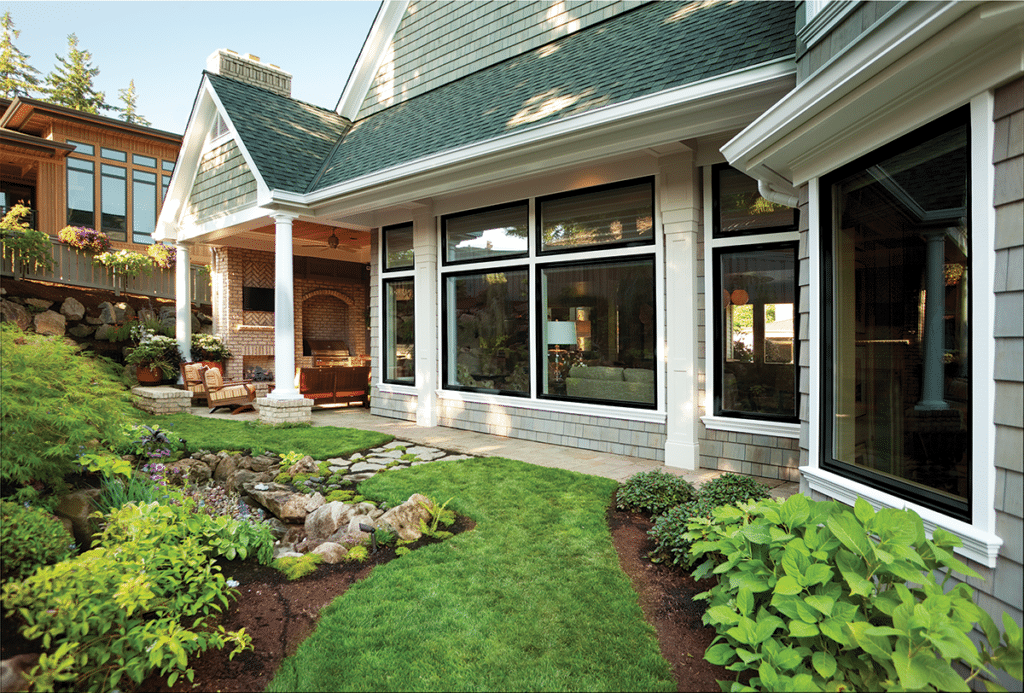
Preservation windows are premium, custom-built vinyl residential windows manufactured in the United States by Preservation, a window brand owned by Associated Materials, Inc. Associated Materials has been in the building products industry since 1947 and is a large, national manufacturer with over $1 billion in annual sales across its product lines.
Preservation was designed from the ground up to be the highest-end window brand in their portfolio, using the full range of available design features, materials, and manufacturing techniques to compete directly with other top-tier residential window products. Unlike entry-level or builder-grade windows, Preservation windows are intentionally positioned at the very top of the vinyl window market, with an emphasis on long-term performance, durability, and efficiency rather than lowest upfront cost.
These windows are primarily used for residential replacement projects, where existing windows are removed and replaced with custom-sized units. Preservation windows are also available in a new construction configuration and are commonly used in additions, renovations, and custom homes where the homeowner is the decision-maker and values quality without compromise. They are generally not used in large tract-home developments, where builders typically prioritize lowest material cost over long-term performance.
From a construction standpoint, Preservation windows use reinforced vinyl frames made from 100% virgin vinyl, rather than recycled material. The frames are welded, multi-chambered, and insulated to improve strength, energy efficiency, and longevity. All Preservation windows are custom-manufactured to fit each specific opening, based on precise measurements taken by trained professionals, rather than produced in standard stock sizes.
Preservation windows are not sold through big-box retailers and are not intended to be a commodity product. They are distributed through authorized, reputable dealers who are expected to follow proper installation and quality-control practices so the windows perform as designed over the long term. As a result, Preservation windows are best suited for homeowners who are looking for a high-end solution designed to deliver comfort, durability, and energy efficiency for decades—not for short-term rental or flip projects where lowest price is the primary concern.
Preservation Windows Reviews: What to Look For (and Where to Read More)
If you’ve searched for Preservation windows online, you’ve probably noticed that reviews can be inconsistent or hard to interpret. That’s normal in the window industry, because many “window reviews” end up blending together three separate things:
- The window product itself
- The quality of installation
- The customer’s experience with the company selling the windows
A homeowner can end up with a great product and a bad experience (or the other way around), depending on who sold and installed the windows. That’s why the most useful reviews tend to focus on long-term results, not just how a sales appointment felt.
What good reviews usually mention
When Preservation windows are evaluated fairly, the most meaningful feedback typically centers on:
- Noticeably reduced drafts and improved comfort
- A quieter home (many people don’t realize how much sound leaks through old windows)
- Smooth operation over time, especially with upgraded internal components
- Fewer issues down the road compared to lower-tier products
What about negative feedback?
The biggest problem we see with Preservation windows is that the dealers will sometimes charge inflated prices and use the old fashioned sales tricks. Fortunately we offer clear itemized pricing with no gimmicks to eliminate that problem.
Another bit of negative feedback that we’ve heard is the limited distribution. Preservation windows were historically only sold through one dealer in each town. If they were great that’s no problem but if they were not so great the customer would be out of luck. Since we’ve started carrying them almost nationally that problem is also solved.
Where to find a deeper review
Rather than repeating a long review here, you can find a more detailed Preservation windows review and comparison resource on The Window Dog (a separate site focused specifically on window research and product breakdowns).
If you want a deeper dive, especially if you’re comparing Preservation to other premium vinyl windows, that’s the best place to start.
Are Preservation Windows High Quality? What Sets Them Apart
When evaluating the quality of residential windows, the most important factors are not cosmetic features or marketing claims, but long-term durability, air sealing, structural strength, energy efficiency, and the quality of components that determine how the window performs over decades of use. Preservation windows were designed specifically to excel in these areas.
Exceptionally Low Air Infiltration (Air Leakage)
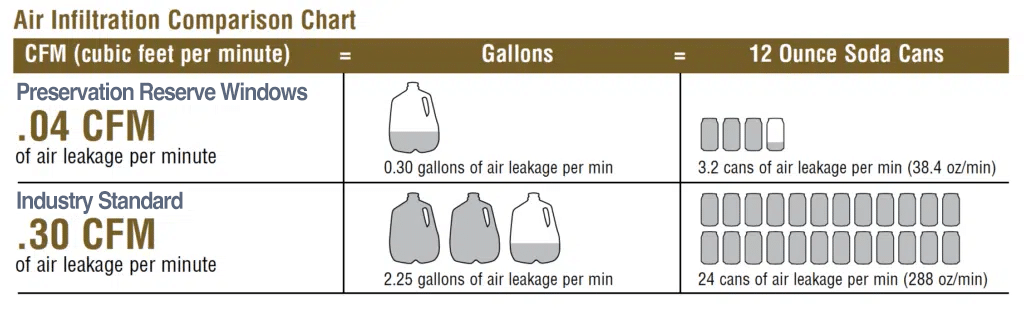
One of the clearest indicators of window quality is air infiltration, sometimes also referred to as air leakage. This measures how much outside air passes through a window when it is closed and locked, expressed in cubic feet per minute per square foot (cfm/ft²) under standardized testing.
Preservation Reserve windows (the newest and most advanced model) achieve an NFRC-certified air infiltration rating as low as 0.04 cfm/ft². For context, many mid-range vinyl windows fall in the range of 0.12 to 0.25, allowing three to six times more air to pass through the window assembly. Even many higher-priced competitors often rate around 0.08, which still allows roughly twice as much air infiltration as this model.
In practical terms, lower air infiltration means:
- Fewer drafts near the window
- More consistent indoor temperatures
- Reduced heating and cooling run times
- Lower energy consumption
- A quieter interior environment
Because it is difficult to achieve ratings significantly lower than 0.04 in real-world residential products, this places Preservation windows firmly in the top tier of available vinyl window performance.
Slim, Reinforced Frames That Maximize Glass Area
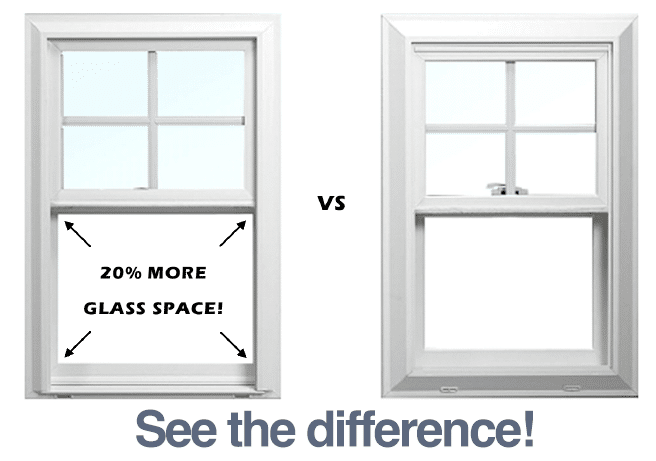
Preservation windows use composite internal reinforcement, which is standard across the product line rather than an optional upgrade. This reinforcement is strategically placed at structurally critical points in the frame and sash, allowing the window to maintain strength and long-term stability without relying on oversized, bulky profiles.
This design approach offers several advantages:
- Slimmer frames and sashes, which increase visible glass area
- More natural light entering the home
- Strong resistance to deflection, bowing, or sagging over time
- Improved sealing performance at the meeting rails and frame interfaces
Many lower-quality or cost-driven window designs compensate for weaker materials by increasing frame thickness, which reduces glass area and can negatively affect both aesthetics and energy performance. Because the reinforcement in Preservation windows is internal and engineered into the design, these tradeoffs are avoided.
Upgraded Hardware and Internal Components
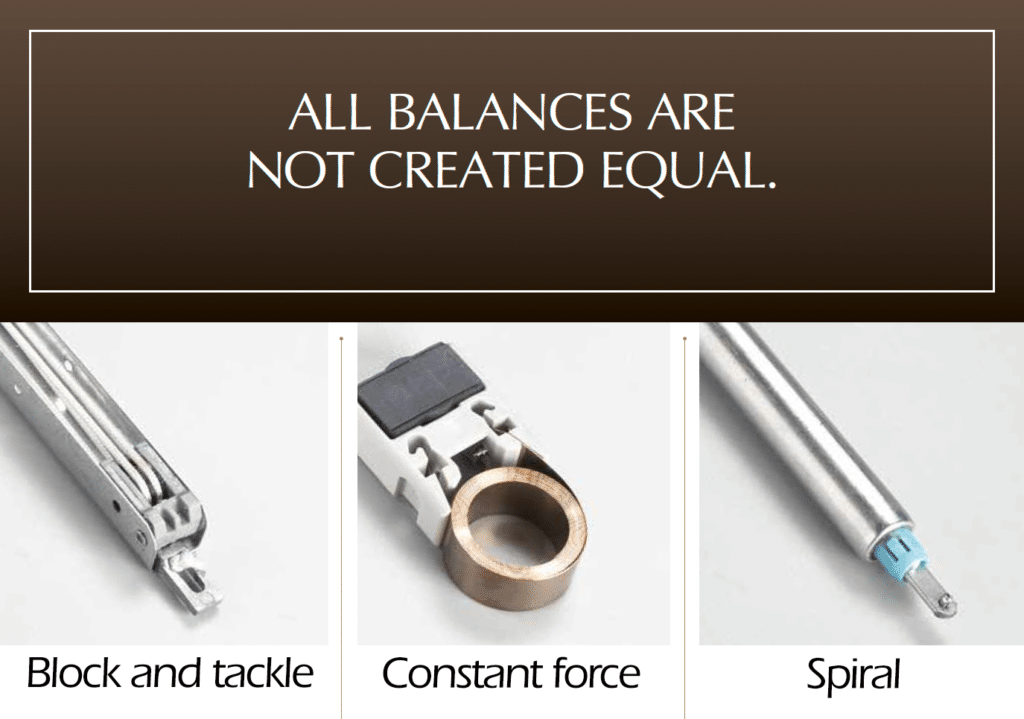
Much of a window’s long-term performance depends on components homeowners rarely see. Preservation windows use upgraded balance systems and hardware that are designed for longevity rather than minimum cost.
The window sashes are supported by an upgraded block-and-tackle balance system, which controls how the window opens and closes and prevents the sash from drifting or falling. These balances are tested to 10,000 open-and-close cycles, compared to the industry-standard 4,000 cycles for more common constant-force or coil balance systems. At one cycle per day, this equates to more than 27 years of daily use.
In addition to increased durability, these upgraded balances provide:
- Smoother operation
- Quieter movement
- Better long-term sash alignment
Other internal quality features include powder-coated locking hardware, often with dual locks on larger units, and multiple types of weatherstripping placed in different areas of the window to optimize sealing performance. These layered sealing strategies contribute directly to the low air infiltration ratings and consistent performance over time.
High-Quality Materials and Construction
Preservation windows are manufactured using 100% virgin vinyl, rather than recycled or regrind material. Virgin vinyl allows engineers to precisely control expansion, contraction, and long-term material stability—an important consideration in a product that must withstand temperature swings year after year.
While manufacturing waste is recycled responsibly, it is intentionally not used in the window frames themselves. Over time, windows made with recycled vinyl are more prone to warping, bowing, and loss of seal integrity. Using virgin vinyl helps ensure that Preservation windows maintain their shape, performance, and appearance for decades.
The frames are welded, multi-chambered, and insulated, further contributing to strength, energy efficiency, and durability.
Consistent Performance With Additive Upgrades
Preservation windows are designed so that high performance is the baseline, not something achieved only through expensive add-ons. All units meet strong performance standards, with optional upgrades—such as enhanced glass packages or triple-pane configurations—providing additional efficiency rather than compensating for weaknesses.
Real-World Results
In real-world installations, these design choices translate into noticeable differences. Homes typically feel less drafty, more comfortable, and quieter immediately after installation. Many homeowners comment that they did not realize how much outside noise or air movement was present until it was reduced.
How Energy Efficient Are Preservation Windows? What the Ratings Mean
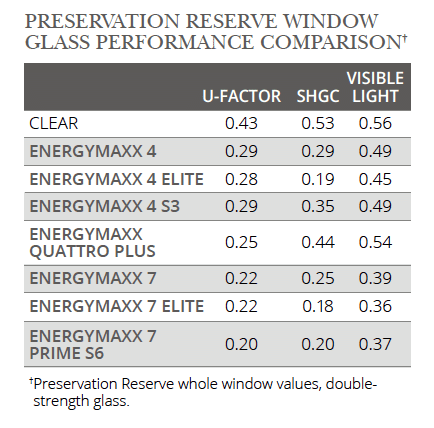
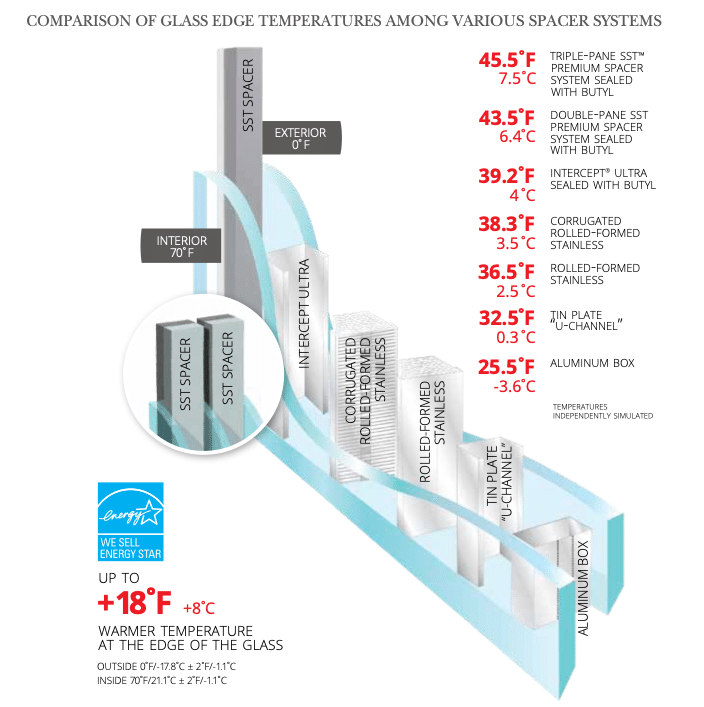
Energy efficiency in windows is best understood as a system, not a single number. Glass type, gas fills, spacers, frame design, air sealing, and installation all work together to determine how a window performs in real-world conditions. Preservation windows are designed with a high-performance baseline and a range of additive efficiency options that allow performance to be tailored to different climates, homes, and homeowner priorities.
Baseline Energy Performance
Preservation windows are not marketed as “Energy Star by default,” but they are built on a strong efficiency foundation. Standard configurations typically include insulated double-pane glass with Low-E coatings, argon gas fill, and upgraded spacer systems, providing a very effective balance of efficiency, durability, and value.
From this baseline, additional efficiency packages are available to meet or exceed Energy Star guidelines in most climates, with further upgrades capable of meeting the more demanding Energy Star Most Efficient criteria when appropriate.
Energy Star and Energy Star Most Efficient Explained
Energy Star requirements vary by climate zone, and not every window configuration is appropriate—or necessary—for every home. Preservation windows can meet Energy Star Most Efficient criteria in all climate zones when configured with upgraded triple-pane glass packages designed for those conditions.
In colder climates, higher insulation values can significantly reduce heat loss and improve comfort near the window. In warmer or sunnier climates, specialized Low-E coatings can dramatically reduce solar heat gain, helping keep interiors cooler and reducing air conditioning demand.
Understanding Efficiency Ratings
When evaluating efficiency, it’s important to understand what the numbers actually mean:
- U-Factor measures how well a window resists heat loss. Lower numbers indicate better insulation. Typical Preservation configurations range from approximately 0.17 to 0.27, depending on glass and package selection.
- Solar Heat Gain Coefficient (SHGC) measures how much solar heat passes through the window. Preservation options typically range from about 0.11 to 0.27, depending on homeowner goals.
- Visible Transmittance (VT) indicates how much natural light passes through the glass.
- Additional ratings such as air infiltration, condensation resistance, and sound transmission help paint a more complete picture of real-world performance.
Rather than relying on general claims, these ratings allow efficiency choices to be made based on measurable performance.
Common Misconceptions About Window Efficiency
Several misconceptions often complicate window decisions:
- “Triple pane is always better.” In reality, the best solution depends on climate, exposure, and priorities.
- “Energy Star means the same thing everywhere.” Energy Star requirements vary by region.
- “More expensive always means more efficient.” Higher prices often reflect business models rather than better performance.
Preservation Windows Warranty: What’s Covered (and Why It Matters)
A premium window is only as good as the company standing behind it. One of the reasons Preservation windows are considered a top-tier option is that they come with a lifetime warranty designed to protect homeowners long after installation.
What the Lifetime Warranty Covers
Preservation windows include a lifetime warranty that covers essentially everything related to the window, including:
- Frames and sashes
- Hardware and operating components
- Glass and the seal between the panes
- Normal function and performance-related issues tied to the product itself
In practical terms, it’s designed to give homeowners peace of mind that they won’t be stuck dealing with window problems years down the road.
Transferable Warranty (Resale Value Benefit)
The warranty is also transferable when a homeowner sells the house. That matters because it can:
- Improve buyer confidence
- Reduce “unknowns” during a sale
- Support resale value by showing the windows are still protected
Many homeowners don’t think about warranty transfer until they’re preparing to sell—but buyers often appreciate knowing they won’t inherit window issues.
What Makes Preservation Windows Different From Other Options?
Many residential windows appear similar at a glance, especially when viewed in a showroom or presented during a sales demonstration. The meaningful differences often come down to design tradeoffs, internal components, and the business model behind how the windows are sold—factors that are not always obvious to homeowners during the buying process.
Design Decisions vs. Sales Decisions
In the broader window market, product design is often influenced by how a window will be sold, not just how it will perform long term. Commission-based, in-home sales models tend to emphasize features that are easy to demonstrate visually or explain quickly, even if those features have little impact on real-world performance.
Preservation windows take a different approach. The product was designed from the outset as an engineering-driven, premium solution, prioritizing measurable performance, durability, and consistency rather than sales presentation.
Avoiding Common Market Tradeoffs
Across the industry, it’s common to see tradeoffs made in order to hit specific price points or support aggressive sales margins. These can include:
- Thicker frames used to compensate for weaker materials
- Lower-cost balance systems or internal hardware
- Simplified weatherstripping strategies
- Performance ratings that meet minimum standards but degrade over time
- Efficiency packages selected for marketing appeal rather than climate suitability
Preservation windows deliberately avoid these compromises. Internal reinforcement, upgraded hardware, multi-layer sealing strategies, and material choices are standard design elements—not optional add-ons intended to upsell a contract.
Climate-Appropriate Performance, Not One-Size-Fits-All Claims
Another area where windows can differ significantly is how energy efficiency is applied. Some manufacturers emphasize achieving the lowest possible rating in a single category—such as solar heat gain—without regard for how that choice performs in a specific climate.
In reality, a configuration optimized for extreme sun reduction in a hot climate may perform poorly in a cold climate, where beneficial solar heat gain can improve overall efficiency and comfort. Preservation windows are designed to be configured appropriately for local conditions, rather than forcing a one-size-fits-all efficiency claim.
How Much Do Preservation Windows Cost? What Affects the Price
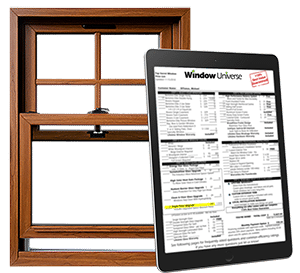
There is no single price for Preservation windows, because every window is custom made to order based on the homeowner’s selections. Rather than relying on estimates or ballpark figures, pricing is determined by the specific combination of window style, options, and installation requirements chosen for each project.
What Actually Affects the Price
Unlike many window companies, Preservation window pricing does not vary by window size. Instead, pricing is determined by:
- Window style and operation type (double-hung, casement, slider, picture windows)
- Glass and efficiency packages
- Color and finish options (including exterior colors or interior woodgrain finishes)
- Installation complexity
Because the base Preservation window is already a top-tier product, upgrades are optional—not required for good results.
Why We Don’t Publish Prices Online
In the past we did have pricing on the website and competitors complained to the manufacturers about us. They asked us if we could keep the pricing private so now we provide exact, itemized pricing by email to anyone who requests it. Problem solved.
A Transparent Quote Process (Designed for Clarity)
Our quoting process is designed to be straightforward and low risk:
- A customer fills out a short form with basic project information
- A window expert (typically with 10+ years of experience) emails a detailed, itemized quote
- We answer questions and make revisions as needed (most customers revise their order about 4–5 times)
- When the customer is ready to proceed, a technician takes exact measurements and confirms feasibility
- The windows are custom manufactured and professionally installed
Why Do Window Quotes Vary So Much? Comparing Your Options
It’s very common for homeowners to receive window quotes that vary widely—even when the projects appear similar on the surface. In most cases, these differences have far more to do with how window companies operate than with the actual windows being quoted.
The Biggest Reasons Window Quotes Differ
Across the industry, a few factors consistently explain why window quotes can be thousands of dollars apart:
- Sales model
- Company overhead
- Bundled “good / better / best” pricing
- Marketing and advertising costs
- Company size and efficiency
None of these factors inherently make a company “bad,” but they do help explain why prices can differ so dramatically.
A Simpler Way to Compare
Comparing window quotes becomes much easier when the focus shifts away from discounts and urgency and toward clarity:
- Is the pricing itemized?
- Are options explained rather than assumed?
- Can the quote be revised as questions come up?
- Does the process feel transparent rather than rushed?
Why Some Companies Use In-Home Sales (and Why We Don’t)
In-home sales have been a common part of the window industry for decades. While the approach may feel outdated today, it still exists for reasons that have more to do with pricing and control than with improving the customer experience.
Why In-Home Sales Are Still Used
From a company’s perspective, in-home sales make it easier to:
- Prevent easy comparison by keeping prices off email and websites
- Charge higher prices without immediate side-by-side scrutiny
- Build urgency and pressure during a long, in-person presentation
- Protect margins through commission-based compensation structures
Why We Chose a Different Approach
We don’t use commission-based, in-home sales because we don’t believe windows require a sales presentation. If a product offers real value, it should be able to stand up to clear information, transparent pricing, and time to decide.
We sell windows the way we would want to buy windows ourselves.
Do Better Prices Mean Lower Quality? Not in This Case
It’s a fair question—and one many homeowners hesitate to ask out loud. In most industries, a lower price can signal lower quality. In the window industry, price differences are often driven by business models, not by the window itself.
In this case, lower pricing reflects efficiency and transparency, not compromise.
Who Are Preservation Windows a Good Fit For? (And Who They’re Not)
Preservation windows are designed for homeowners who value long-term comfort, performance, and clarity over quick decisions or surface-level upgrades.
They’re a great fit for homeowners who:
- Want clear information and time to decide
- Are replacing old, drafty, or inefficient windows
- Care about comfort, efficiency, and durability
- Plan to stay in their home long-term
They’re generally not ideal for:
- Short-term projects such as flips or rentals
- Buyers focused solely on the lowest upfront price
- Situations requiring immediate off-the-shelf window sizes
Next Steps: Reviewing Your Quote and Moving Forward
If you’ve already received a quote from us by email, you’re exactly where you should be.
Review Your Quote at Your Own Pace
Your emailed quote is designed to be a starting point, not a final commitment. It allows you to review:
- The window styles and quantities included
- Itemized pricing
- Popular style and efficiency options
- Efficiency ratings for multiple glass packages
- Answers to common questions
Ask Questions or Make Changes Anytime
If you have questions or want changes, just reply to the email. You can also schedule a call with one of our window experts.
If you’re unsure how to describe something, you can email photos instead. It’s often the easiest way to communicate details, and it’s something we do every day.
Finalizing the Order
Once we’ve adjusted the quote so it reflects exactly what you want, we’ll send the order forms electronically. After those are completed:
- Our installation department will schedule a measurement appointment
- A technician will take precise measurements and confirm feasibility
- Changes can still be made at this stage if needed
After measurements are confirmed, the windows are custom manufactured, delivered to the local warehouse, and your installation is scheduled.
If You Haven’t Received a Quote Yet
If you’re reading this page before receiving a quote, you can start by checking whether we offer service in your area. From there, we’ll email the same clear, itemized pricing information so you can see how the process works before making any decisions.
Hello, I just received the pricing info by email which is great. I have a few questions and I think I want to make a change to the quantity. I might also want to switch from single hung to double hung windows, but I’m not exactly sure. Who should I talk to about that?
Hi Jen, I’m glad you’re enjoying the process so far. You can just reply to the email we sent you. It looks like Drew from our office sent you your first quote. He’s knows everything about windows so he’ll be a great resource. You can also schedule a call with him or just give him a ring anytime, contact info is in the email.
Let me know if there is anything else I can do to help. We look forward to working with you!